🥜 Pandemic EBT (P-EBT)
Provides benefits to children who would have received free or reduced-price school meals during COVID-related school closures — issued similar to SNAP benefits.
The Supplemental Nutrition Assistance Program (SNAP) delivers monthly grocery benefits to eligible low-income households through an easy-to-use EBT card. Apply, check eligibility, and get the food help your family deserves.
Apply for SNAP EBT → Learn How It WorksSNAP (Supplemental Nutrition Assistance Program), formerly known as the Food Stamps Program, is a federal program that helps low-income individuals and families purchase food for a healthy diet. Eligibility is determined by state-specific income limits, household size, and available resources.
EBT (Electronic Benefits Transfer) is the system used to deliver SNAP benefits. Instead of paper food stamps, you receive an EBT card that works like a prepaid debit card — benefits are deposited automatically each month and unused balances roll over.

Applying for your EBT card is simple. Follow these steps to start receiving your monthly food assistance benefits.
Your household's gross monthly income must generally be at or below 130% of the federal poverty line. Income limits vary by household size and state — use our quick check to see where you stand.
Apply online, in person, by mail, or by fax through your state SNAP office. Gather proof of identity, income, residency, Social Security numbers, and shelter/utility costs.
Your local SNAP agency reviews your documents and schedules a phone or in-person interview to verify your information. A decision typically arrives within 30 days.
Your EBT card arrives in a plain white envelope. Set your PIN, then swipe and enter your PIN at checkout — just like a debit card. Benefits reload monthly.
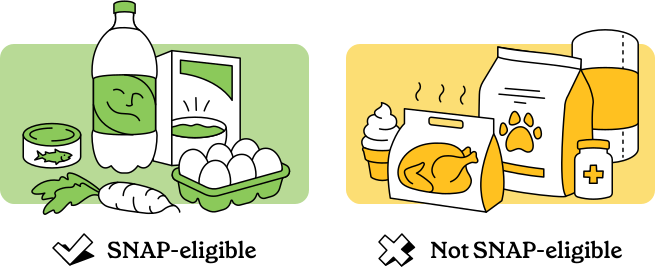
Your EBT card covers nutritious groceries at authorized retailers displaying the "We Welcome SNAP EBT Customers" sign.
| ✔ Eligible Purchases | ✘ Not Eligible |
|---|---|
| Fruits & vegetables (fresh, frozen, canned) | Alcohol & tobacco |
| Meat, poultry, fish & seafood | Vitamins, supplements & medicines |
| Dairy — milk, cheese, yogurt, eggs | Hot or prepared store meals* |
| Bread, cereal, pasta & grains | Pet food & animal supplies |
| Snacks — chips, crackers, popcorn | Toiletries & cosmetics |
| Non-alcoholic drinks — juice, water, soda | Cleaning supplies & paper products |
| Seeds & plants that grow food | Food containers & wrapping |
| Baby formula & diabetic foods | Live animals (except shellfish/fish) |
*Exception: the Restaurant Meals Program allows eligible seniors, people with disabilities, and homeless individuals in participating states to buy approved prepared meals.
If you qualify for SNAP EBT, you may also be eligible for additional government assistance programs.
Provides benefits to children who would have received free or reduced-price school meals during COVID-related school closures — issued similar to SNAP benefits.
Temporary Assistance for Needy Families delivers cash benefits for housing, utilities, and clothing — often loaded on the same EBT card as a separate balance.
Nutrition support for pregnant people, new parents, and children under five via a separate eWIC card for approved foods from grocery stores and WIC retailers.
California's CalFresh is the state version of SNAP. College students may qualify with work-study or 20+ hours of weekly work. Every state runs its own program.
Every state administers its own SNAP food stamp program. Find information for your state:
Quick answers to the most common questions about food stamps and EBT benefits.
SNAP (Supplemental Nutrition Assistance Program), formerly food stamps, provides monthly food benefits to eligible low-income households. Benefits are delivered electronically via an EBT card that works like a prepaid debit card at authorized grocery stores and retailers nationwide.
You can apply for SNAP through your state or local SNAP office online, in person, by mail, or by fax. You'll need proof of identity, income, residency, and household expenses. Most applicants receive a decision within 30 days — or within 7 days for emergency expedited assistance.
Once approved, you receive your EBT card within 30 days of applying, or within seven days if you qualify for expedited emergency assistance. The card arrives in a plain white envelope with PIN setup instructions.
You can buy fruits, vegetables, meat, poultry, fish, dairy, bread, cereals, snacks, non-alcoholic beverages, and seeds or plants that grow food. You cannot buy alcohol, tobacco, vitamins, hot prepared foods, pet food, or household supplies like paper towels.
Check your balance on your grocery receipt, through your state's EBT mobile app or website (like ConnectEBT or ebtEdge), by calling the EBT customer service number on the back of your card, or by contacting your local SNAP office.
Yes! Any remaining balance rolls over to the next month, and older benefits are used first. However, benefits may expire after extended periods of non-use, so use your card at least once every three months and recertify on time.